
Follow Maintenance Guidelines for SMC Panel Water Tanks
SMC Panel Water Tank Manufacturers
“Strong tanks are built by manufacturers, but lasting performance is built by maintenance.”
A strong tank alone isn’t enough; consistent care is what truly guarantees durability and performance. Even the most robust SMC panel tanks require regular inspections and timely upkeep to prevent leaks, contamination, and structural stress. Proactive maintenance not only extends the tank’s lifespan but also ensures safety and hygienic water storage. Even tanks by leading SMC Panel Water Tank Manufacturers require regular inspections and timely upkeep to maintain their structural integrity and water hygiene standards.
It is very important to protect the tank before it makes a costy repairs; following the right guidelines can make all the difference. In this blog, we are going to explore 10 Must-Follow Maintenance Guidelines for SMC Panel Tanks.
Regular Panel Condition Inspection
Routine inspection of the SMC panel is essential to maintain structural strength and long-term performance. Over time, environmental exposure, pressure variations, and external impact can cause minor cracks, surface wear, or joint misalignment. Conducting periodic visual and physical checks helps identify early signs of damage before they escalate into leaks or structural failures. Pay close attention to panel edges, bolt areas, and connection points where stress is most common. Timely detection and corrective action not only preserve water quality but also extend the overall lifespan of the tank.
Tighten Bolts and Joints
Weak joints and loose bolts may severely damage the structural integrity of an SMC panel tank over a long period. The tightness of fasteners is continuously decreased by constant pressure of water, changes in temperature, and environmental vibrations. Even a loosened bolt, to a small extent, may provide small holes between panels, which may result in departmental leaks or misalignment. Regular checking and tightening of the tank keeps the tank steady, safe, and without leakages. Joints will be taken care of in advance to ensure that the entire system is strong and will last longer.
- Inspect all external and internal bolt connections.
- Retighten loose fasteners immediately.
- Check joint alignment between panels.
- Look for rust or corrosion on metal parts.
- Replace damaged bolts when necessary.
- Maintain proper torque levels during tightening.
Interior Sludge Cleaning Schedule
With time, at the bottom of the tank, the sediment, the particles of dirt and minerals, settle. Otherwise, this sludge may impact the quality of water, promote the growth of bacteria, and decrease the storage capacity. A cleaning routine allows to maintain sanitary conditions and continuous functioning. Careful cleaning is needed to ensure that there is no damage to the interior panel surface, but that the debris that has been collected is totally eliminated. Regular maintenance preserves the purity of water as well as prolongs the durability of the tank.
- Drain the tank periodically.
- Erase the dirt and debris that settles down.
- Wipe down interior panel surfaces.
- Only approved cleaning agents should be used.
- Do not use sharp objects to ruin panels.
- Wash and dry carefully, and then refill.
Monitor Water Quality Levels
Significantly, structural durability is considered, whereas water hygiene is essential. Water quality is regularly checked, and in that way, the stored water is not dangerous to use. Early warning signs of underlying problems are chemical imbalance, microbial contamination, or abnormal odor and color changes. Regular testing identifies issues in time before they get out of hand so that corrective measures can be taken. The important role of ensuring the purity of water is having clean sources of inlet and properly functioning filtration systems.
- Perform regular water analysis.
- Check pH and chlorine levels.
- Watch for abnormal smell or colour.
- Check against microbial contamination.
- Make sure the source of inlet water is clean.
- Keep the right filtration systems clean.
Check Seals and Gaskets
Seals and gaskets are other necessary bits that ensure that between the joints of the panels, there is no leakage of water. With time, they can get hard, shrink, or crack under constant pressure and exposure to the environment. Leaks caused by damaged seals have the effect of weakening the structure, and the wastewater flows slowly. Frequent inspection is done to make sure that gaskets are not hard and intact. Timely replacement of the worn-out sealing materials will save on expensive repair costs and improve the efficiency of the tank.
- Inspect gasket condition regularly
- Look for signs of leakage.
- Replace worn or brittle seals.
- Ensure proper sealing during installation.
- Avoid over-tightening that damages gaskets.
- Use compatible replacement materials.
Ensure Proper Ventilation System
An efficient ventilation system ensures that internal pressure and condensation inside the tank do not occur. Inadequate airflow may result in moisture retention, which would impact the level of water quality and panel strength. During water discharge, ventilation also helps to avoid the formation of a vacuum. Smooth tank operation and structural stability are achieved by ensuring vents and overflow systems are clean and operational.
- Check the vents of the airways.
- Wash round screens after every use.
- Check overflow pipes in good condition.
- Stop the entry of insects or debris.
- Have equal intraprostatic pressure.
- Damage check ventilation caps.
Inspect Base Support Structure
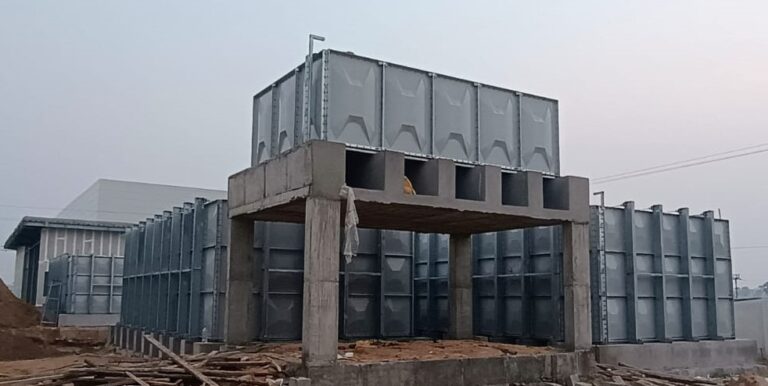
The tank is supported on the foundation with the whole load of stored water. Any vulnerability in the base may lead to uneven distribution of pressures, misalignment of the panel, or cracks in the structure. The support structure must be checked on a regular basis to maintain safety and stability. The base (be it concrete or steel framed) should be flat and free of cracks, so that it has the right load balance.
- Check for cracks in the foundation
- Ensure level ground support
- Inspect concrete or steel frames
- Look for signs of settlement
- Confirm weight distribution is even
- Repair structural issues immediately
Protect From UV Exposure
Even though SMC panels are engineered to withstand excessive conditions, the delaying effects of direct sunlight may start to impact the external strength and outlook of the panels. Long-term exposure to UV radiation can lead to fading, surface brittleness, or small cracks. Taking precautionary measures minimizes the effects of weather on wear and tear and prolongs life.
- Install protective roofing wherever possible.
- Apply UV-resistant coatings
- Do not expose to direct and extended sunlight.
- Check the surface to see whether fading or cracks.
- Make use of protective coverings.
- Check on weather damage.
Test Inlet and Outlet Valves
The flow and pressure of water in the tank system are controlled by valves. Defective or plugged valves may interfere with the flow of water, cause an imbalance in pressure, or cause leakage. Regular tests would keep the machine running smoothly and avoid the occurrence of unexpected failures. It is necessary to keep the valves clean and operational to ensure an efficient performance.
- Check valves should operate smoothly.
- Check around fittings for leakage.
- Erase rubbish on valve openings.
- Oil moving parts where necessary.
- Replace worn-out components.
- Periodic test flow control.
Schedule Annual Professional Maintenance
Though regular check-ups may be done within the organization, professional servicing offers thorough analysis and technical skills. Experts have the capability of detecting latent structural vulnerabilities, misalignment, or conceivable system vulnerabilities that cannot be detected. Professional maintenance every year is associated with a higher level of reliability, adherence to safety standards, and the ability to preserve the efficiency of operations in the long term.
- Conduct comprehensive structural inspection.
- Perform professional water quality testing.
- Evaluate panel alignment and stability.
- Replace aging components proactively
- Review overall system performance.
- Maintain detailed maintenance records.
Secure Today, Sustain Tomorrow
SMC Panel Tanks Maintenance is not just a routine task; it is a long-term commitment to performance, safety, and reliability. When supported by trusted SMC Panel Water Tank Manufacturers, these tanks are engineered for strength, but consistent upkeep is what truly preserves their durability. Regular inspections, cleaning schedules, and structural monitoring ensure uninterrupted water storage without unexpected breakdowns. Taking action today means preventing costly repairs tomorrow. With a proactive maintenance approach, you safeguard water quality, extend the tank’s lifespan, and ensure dependable performance for years to come.